Our grandmothers knew something we have forgotten.
It was never about suffering in silence or simply enduring. It was about being, inhabiting their bodies, their presence, their femininity so fully that the people around them felt it without being told a single word.
Yoruba women in particular carried a quiet wisdom about what it meant to be a fully awakened woman. Beyond being a wife or a mother, they understood how to be a force, a woman who knew her worth before she said a word, a woman whose energy entered a room before her body did.
This wisdom was passed down quietly through conversations between women, in what grandmothers said before the wedding, in the rituals older women performed not for anyone else but purely for themselves.
Most of us were never taught any of it. I was not either.
✦ ✦ ✦
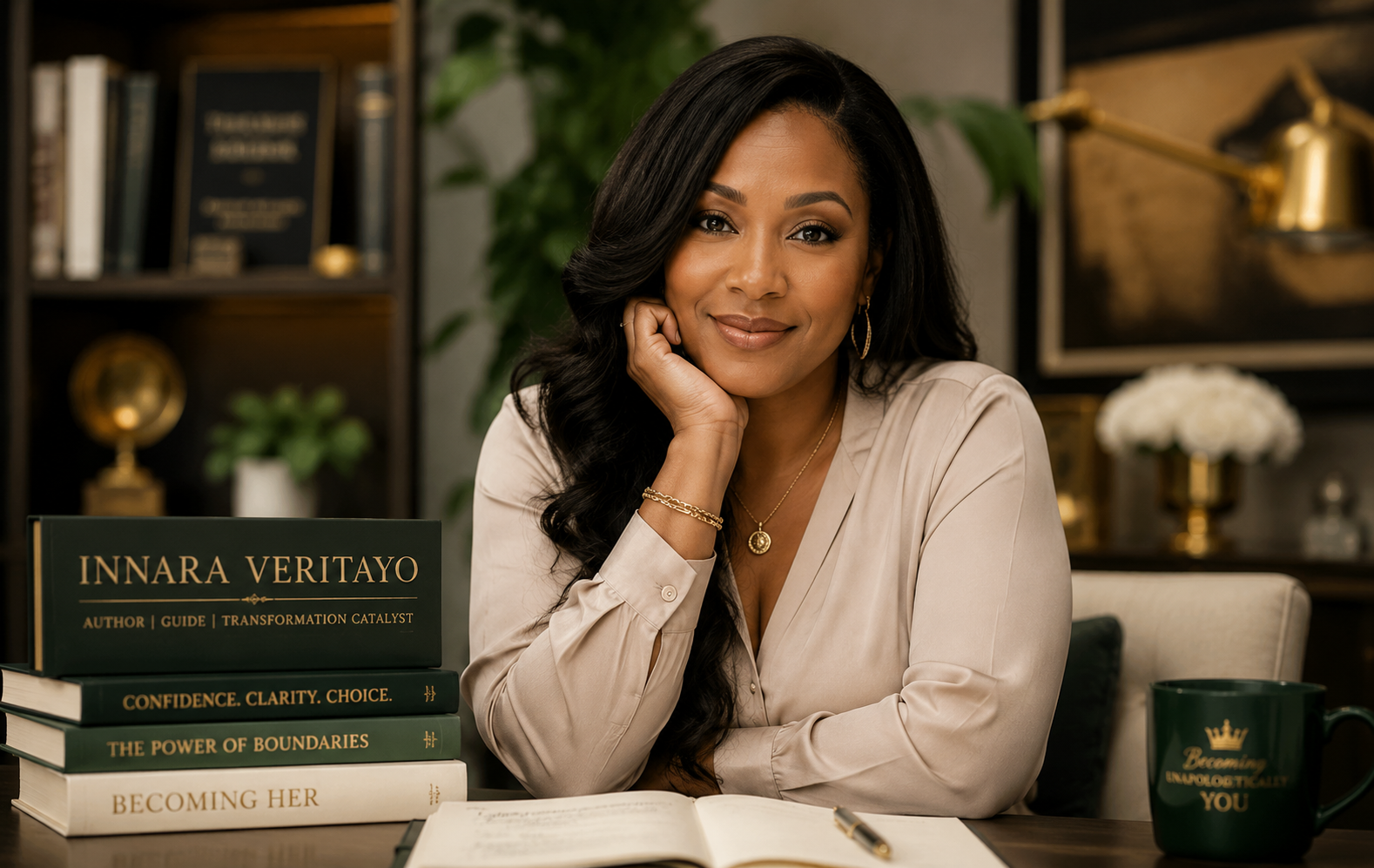
Hi. My name is Innara Veritayo.
The first thing you should know about me is that I am a 38-year-old married woman, a mother of three children aged 8 to 13, an employed professional, and a higher learning student. I am thriving in my career and blazing in my academics. From the outside, I have it together completely.
From the inside, I spent years being Detective Anikulapo in my own home. Checking timestamps. Memorising names. Stumbling on conversations that were never meant for my eyes and having to close the phone and carry on with dinner like my chest was not on fire.
The emotional agbere in my marriage was the quiet kind. Conducted in messages, in energy directed everywhere except toward home, per every branch he worked, per every new situation, the same cycle restarting. And I was the one spending my health, my peace, and my sense of self trying to investigate and manage a cycle that was not mine to fix.
I looked at the other woman's pictures. Young, free, baddie energy, no responsibilities, no history. And I, with everything God had given me, the career, the children, the depth, the life, felt like orogiri by comparison. That comparison almost finished me.
What saved me was a decision I made on a quiet Tuesday night. I put the phone down for the last time and chose myself instead. What happened in the nine days that followed surprised even me.
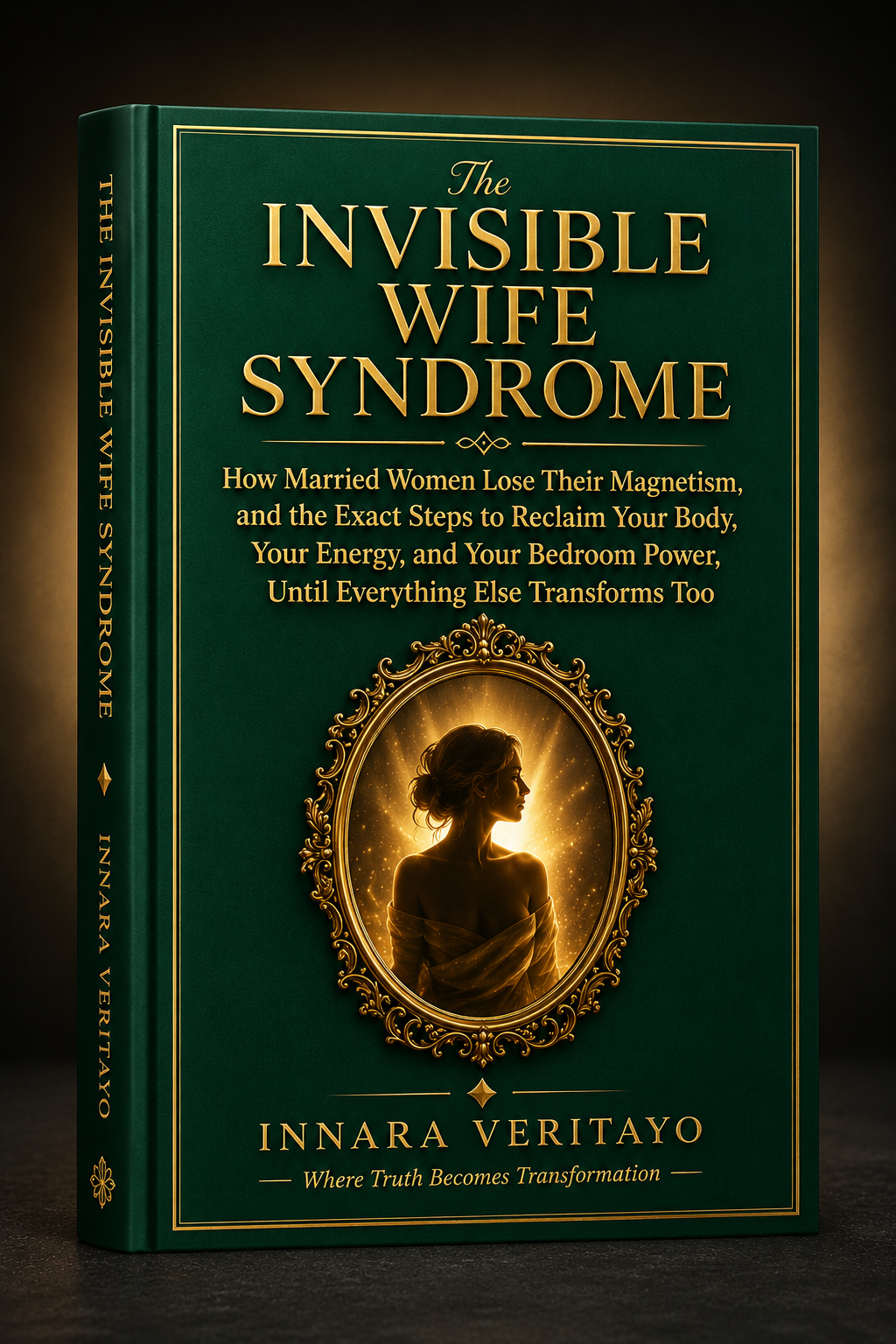
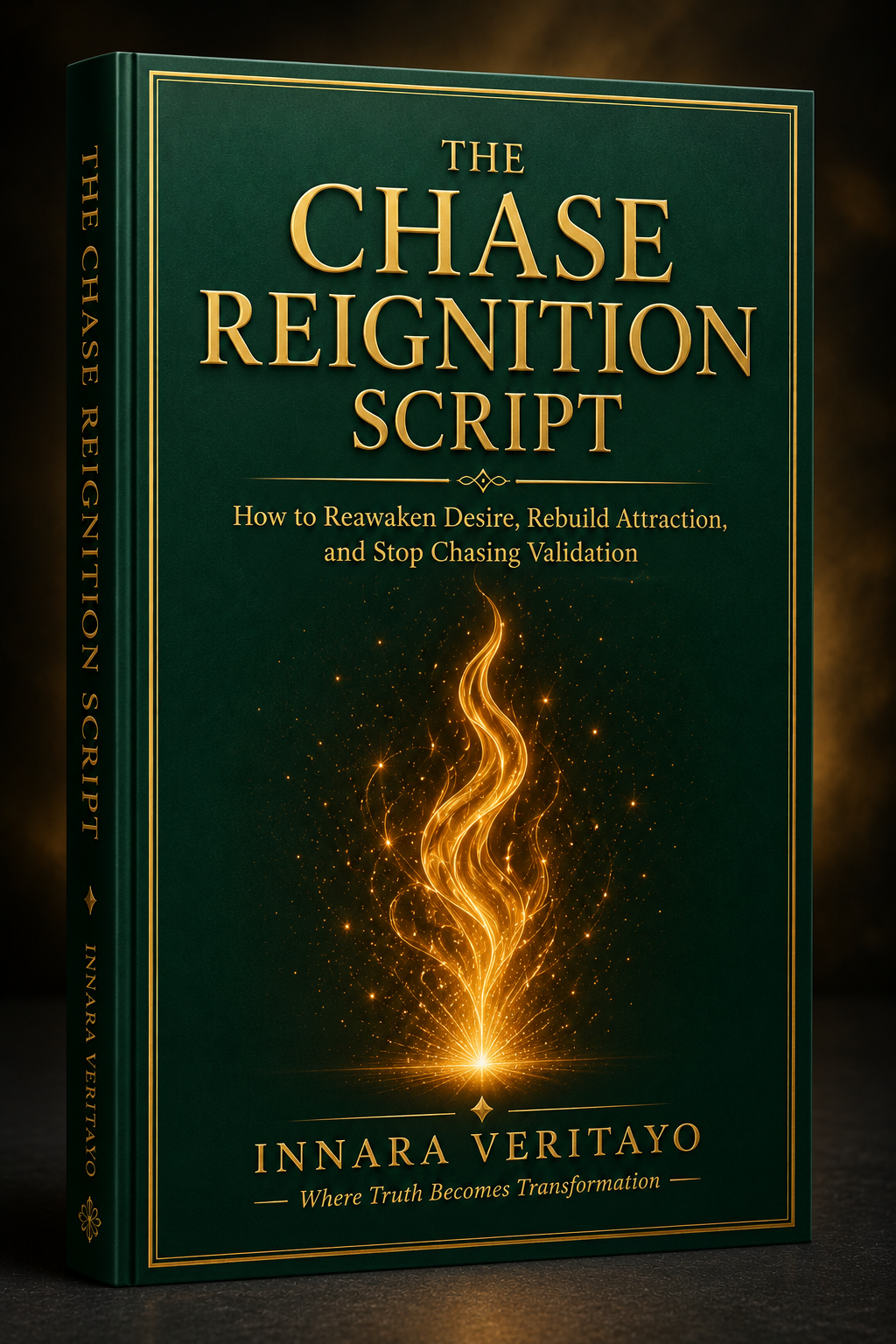
I am a writer who lived this story from the inside. What follows is the framework that brought me back to myself, and the one I am now sharing with every woman who recognises her own chest in these words.
✦ ✦ ✦
It started, as so many things do, gradually and without announcement.
I remember the exact moment I realised something had shifted between my husband and me. I was scrolling through his phone one evening, looking for a photo he said he had sent me. What I found instead were messages. Flirty ones, warm ones, the kind filled with the easy playfulness he used to pour into our early days together. I had not seen that version of him directed at me in a very long time. And there it was, offered freely to someone else.
I put the phone down quietly. I walked to the bathroom, turned on the tap so nobody would hear me, and stayed there a long time.
When did I become the background of my own marriage?
I had been the good wife, the faithful wife, the available wife. I built our home, raised our children, held everything together while building my own career and finishing my studies, showing up every single day for everyone around me. I had done everything right.
And somehow, in doing everything right for everyone else, I had disappeared from my own life.
I called my closest friend. She listened for twenty minutes and then said words that broke something loose inside me:
"Innara, na you push am. You too busy being a mother and a worker. You forget to be a woman. He go look for the woman somewhere else."
I wanted to be angry. But I knew, in the honest part of me that I had been avoiding, that she was touching something real. Not about what he did, because that was his choice and his responsibility alone. But about what had happened to me. I had allowed the demands of life to slowly extinguish something essential, and I had called it sacrifice when it was really a slow disappearance.
So I started searching for a way back to myself.
I tried everything I could find.
I bought an online "feminine energy" course for N35,000, full of American advice about being soft and receptive that had nothing to do with my life as a Nigerian wife, mother, and professional. It spoke to a woman without children and without real obligations. Every lesson felt like it was written for someone else entirely.
I followed several "make him chase you" coaches on Instagram and tried their tactics. Attempting to play hard to get inside a marriage with three children and a shared mortgage felt absurd. My husband looked at me like I had lost my mind, and honestly, I could not blame him.
I went for a full makeover, new hair, a new dress, the works. He complimented me that evening. By the following week we were back to the same silence. The dress could not fix the invisible thing that had broken between us.
I joined a marriage support prayer group. The sisters prayed beautifully and I felt genuinely uplifted every Sunday, then deflated again by Tuesday. I kept feeling that prayer without the inner work was a ceiling with no floor beneath it.
I tried being more physically available, thinking that was the missing piece. But closeness without real connection felt hollow for both of us. He could feel I was somewhere else inside, and I could feel he had not fully come home either.
I journaled, I affirmed, I walked. None of it was wrong, but none of it was touching the root of what I had actually lost.
I was spending money, spending time, spending tears, and still waking up every morning feeling like a woman who had misplaced herself and could not remember where she had last been whole.
✦ ✦ ✦
The encounter that changed everything happened at a family gathering in my mother-in-law's compound, a large Sunday afternoon full of food, relatives, and the particular beautiful chaos of extended family life.
I had stepped away from the noise to sit under the mango tree at the side of the yard. My mind was still heavy. I was watching the other women laugh with their whole bodies, easy and bright and completely unguarded, wondering when I had last laughed like that.
An elderly woman came and sat beside me. Her name was Mama Agba Ifeoluwa, close to seventy-eight years old, a lifelong friend of my husband's grandmother. She wore a deep blue buba and gele and moved with the particular unhurried certainty that some older women carry, as if they have long since made their peace with time and stopped fighting it.
She looked at me for a moment without saying anything. Then she said, in her easy mixture of Yoruba and English:
"You look like a woman who has forgotten who she is. And I do not mean who she is to him. I mean who she is to herself. That is the beginning of everything. And the forgetting of everything."
I did not ask how she knew. I just started talking. She listened the way older women listen, completely, without interrupting, without judging, with the patience of someone who has sat under many trees with many women and knows how these stories tend to go.
When I finished, she was quiet for a moment. Then she began.
"These courses you bought," she said, "they teach you to perform. To perform confidence, to perform desire, to perform attraction. But a woman's power does not live in performance. It lives in presence. When a woman is fully present in herself, in her body, her energy, her knowing, everything around her responds. Because she simply is."
She told me that Yoruba women of her grandmother's generation understood something that modernity had quietly covered over: a woman's magnetism is rooted in her relationship with herself. And that relationship can be cultivated, rebuilt, and restored at any age, at any stage of marriage, regardless of what has already happened.
She then described a framework to me, something practical and personal and deeply human, a structured journey through seven areas of a woman's life that, when tended to honestly, transform everything around her as a natural consequence.
"Start with how you see yourself," she said. "Then how you inhabit your body. Then how you show up in your home. Then how you reintroduce yourself to your husband, and through all of it, know your worth so completely that his behaviour stops being your emergency."
I sat under that mango tree for over an hour.
If I am being fully honest with you, my first reaction was scepticism. It sounded too simple. Where were the tactics, the scripts, the seven-step formula? She must have read my face because she laughed, a warm, unhurried sound that seemed to have all the time in the world.
"Simple is not weak," she said. "Simple is what lasts."
✦ ✦ ✦
I went home that evening and began.
The first three days, nothing dramatic happened. I was doing the inner work, the audit, the reflection, the quiet daily practices she had outlined. On Day 4, I nearly stopped. I thought, here we go again, another thing that does not work for me.
Day 6 was when something shifted.
I was getting dressed for work, nothing special about the morning, and I caught myself in the mirror. This time, I did not look away. I stood there and looked, not picking myself apart, just actually looking. And something was genuinely different. My body had not changed. But the way I was standing in it had. The way I was inhabiting the space I occupied.
Oh, I thought. There you are.
By Day 10, my husband said something that made me go very still. He looked at me across the dining table, mid-conversation about something ordinary, and said:
"You look different. What are you doing? You look really good."
I had bought nothing new. I had changed nothing visible. But he was seeing something real, because it was real.
Three weeks later, he was making plans for us, asking which restaurant I wanted to visit, coming home with intention, looking at me the way a man looks when he is remembering why he chose someone and finding himself glad that he did.
My marriage is a work in progress, as most honest marriages are. But I am better, and from that better version of me, everything around me is becoming better too.
Two women from that same family gathering saw the change in me and asked what had happened. Both tried the same framework. One called me five weeks later, voice breaking with relief, telling me her husband had cancelled a work trip just to spend the weekend with her. The other sent a voice note at midnight: "Innara, he asked me to dance in the kitchen. We have not danced since our wedding. What did you give me?"
I gave them what Mama Agba Ifeoluwa gave me. And now I am giving it to you.